
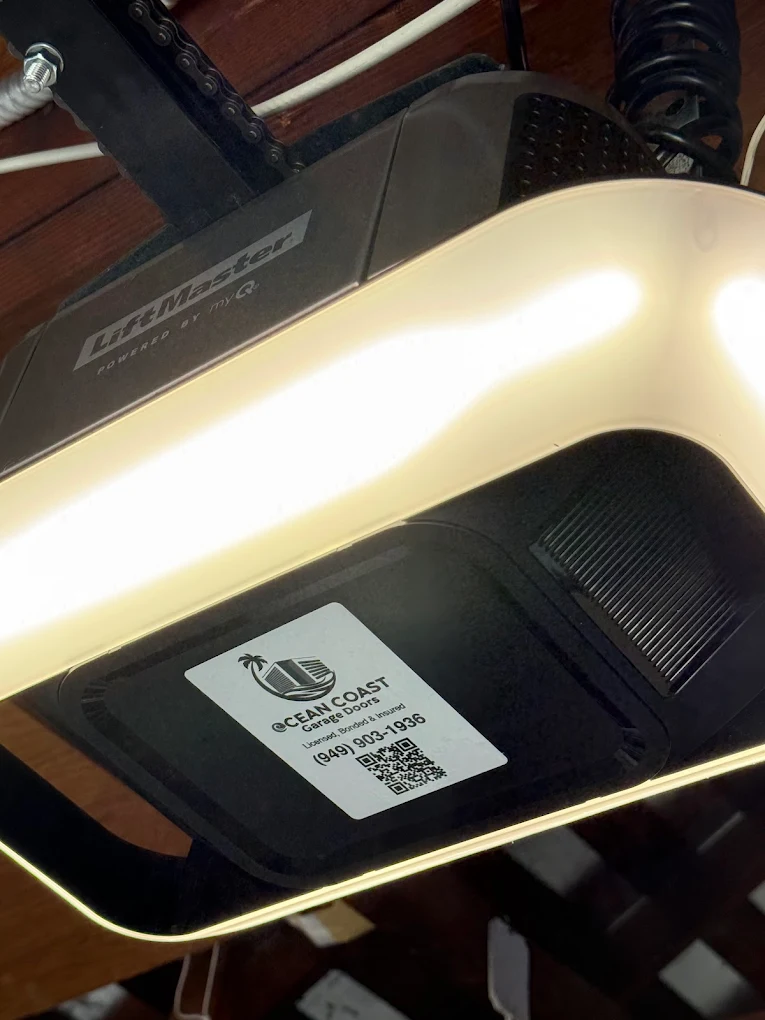
In Irvine, CA, a LiftMaster garage door opener can last for years, but it will not stay perfect forever. Over time, you may notice the opener getting louder, responding more slowly, or needing repeated resets and adjustments just to keep the door moving normally.
At that stage, homeowners often weigh whether a repair will restore dependable performance or if replacing the opener makes more sense for quieter operation, improved safety features, and modern smart access. Understanding the typical signs of wear can help prevent ongoing issues and lead to a more reliable garage door system.
Start With the Most Important Signs
Before you decide, it helps to separate “one-time issues” from “repeat issues.” A one-time issue is usually a repair. Repeat issues often point toward replacement, especially when the opener is older.
Here are the most helpful signs to start with:
- Breakdowns keep returning
- Door acts unpredictable
- Opener sounds strained
- Remotes stop often
- myQ keeps dropping
- Safety issues appear
If you are currently dealing with strange behavior and want to try a reset first, read How to Reset a LiftMaster Garage Door Opener (Step-by-Step).
When a Repair Usually Makes Sense
A repair is usually the smarter option when the opener is generally reliable, and the problem is clear and limited. Many LiftMaster Garage Door Opener repair issues are caused by sensors, pairing problems, travel settings, or small worn parts that can be corrected without replacing the entire unit.
The opener works, but one feature is failing
If the door opens and closes smoothly, but a remote, keypad, or app feature is not working, that is often repairable.
Common repair-only issues:
- Remote lost pairing
- Keypad needs pairing
- Wall control lock on
- myQ setup glitch
In many cases, this is solved by re-pairing devices, reconnecting myQ, or correcting a setting that changed after a power flicker.
If you want symptom-based troubleshooting, read Common LiftMaster Garage Door Opener Repair Issues.
The door is the real issue, not the opener
Many homeowners assume the opener is failing when the real problem is the garage door system. If the door is heavy, binding, or out of balance, the opener can struggle and behave inconsistently.
Door-related signs:
- The door feels heavy
- The door sticks on the track
- The door jerks while moving
- Rollers wobble badly
If the door hardware is corrected, the opener may return to normal performance without replacement.
The opener is newer and has been stable
If your LiftMaster unit is newer and has been consistent until recently, it is usually worth repairing. A sudden change is often linked to:
- Power outage event
- Sensor alignment shift
- Loose wiring connection
- Travel limits adjustment
A technician can inspect the system, address the root cause, and confirm the opener is safe. That type of garage door service visit often resolves sudden issues caused by power events or minor alignment shifts.
When Replacement Usually Makes Sense
Replacement becomes the smarter option when the opener is older, keeps failing, or no longer fits your needs. The goal is not to replace early. The goal is to avoid throwing time and service money at the same problems again and again.
As a baseline, Angi notes the typical lifespan of a garage door opener is often around a decade-plus, with heavy doors and frequent use shortening it.
Repeat failures that keep coming back
If you have already handled the basic fixes, but the issue returns, replacement may be the better long-term decision.
Repeat issue patterns:
- Needs reset often
- Door reverses often
- Remotes fail weekly
- myQ drops repeatedly
If the opener works for a short time after a reset, then returns to the same problem, it can be a sign that internal parts or the logic board are failing.
The opener struggles to lift or sounds strained
A LiftMaster garage door opener should not sound like it is fighting the door. Straining sounds and heavy vibration can point to a unit that is worn out, undersized for the door, or both.
Strain signs:
- Motor hums loudly
- Loud grinding noise
- Rail shakes strongly
- Chain slaps hard
Sometimes the opener is fine, and the door is heavy due to spring issues. But if the door is balanced and the opener still struggles, replacement may be the right move.
Safety features are outdated or inconsistent
Safety should be the top priority. If your opener does not respond reliably to sensor checks or reversal testing, stop using it until it is inspected.
Safety warning signs:
- Sensors unreliable
- The door will not reverse
- The door closes unpredictably
- Wall control fails
Modern LiftMaster models are built around consistent safety performance. If an older unit is unpredictable, replacement can be the safer option.
You want better access and smarter control
Sometimes replacement is not about failure. It is about upgrading your daily experience. Homeowners often replace to gain:
- Quieter operation
- More stable myQ
- Better lighting
- Improved security
If you are thinking about a new unit, read LiftMaster Garage Door Opener Installation for Homeowners.
The “Repair First” Checklist That Saves Time
Before you decide to replace, it helps to confirm whether the issue is a simple repair. These checks are safe and can prevent an unnecessary replacement.
Check 1: Confirm the safety sensors
Sensor issues are one of the most common reasons a door will not close. Make sure:
- Lenses are clean
- Brackets are steady
- The lights are steady
If the door closes only when you hold the wall button, sensors are a strong suspect.
Check 2: Confirm wall control settings
Some wall controls include a Lock feature that blocks remotes and keypads. That can make it seem like the opener is failing.
- Lock mode turned off
- The wall button responds fast
- Wiring looks secure
Check 3: Confirm remote and keypad pairing
A lost pairing can happen after a reset or a power flicker. Re-pairing is quick and often solves the issue.
- Learn button works
- Remote pairs normally
- Keypad PIN accepted
Check 4: Confirm the door moves smoothly by hand
Disconnect the opener using the emergency release and lift the door by hand.
Healthy door movement:
- Lifts smoothly
- Stays mid-height
- Does not slam down
If the door is heavy or drops fast, stop and schedule service. That points to a spring or door hardware issue, not an opener logic issue. This type of balance test is a core part of garage door maintenance, and it protects the opener from strain and repeated breakdowns.
Repair vs Replace Scenarios Homeowners See Often
These examples help you match your situation to a common pattern. If you want a simple way to weigh your situation, this explains how homeowners typically decide between repair and replacement when symptoms overlap.
Scenario: The opener is fine, but remotes fail
If the wall control works but the remotes do not, the issue is often:
- Remote battery low
- Lock mode enabled
- Remote lost pairing
That is usually a repair or settings fix, not a replacement.
Scenario: myQ will not connect consistently
If myQ drops offline repeatedly, common causes include:
- Weak Wi Fi in the garage
- Router setting conflict
- Opener Wi Fi module issue
If your Wi Fi coverage is weak, improving coverage may solve it. If coverage is strong and the opener still drops, replacement can be worth it for stability.
Scenario: The opener is loud and shakes the ceiling
This could be:
- Weak mounting support
- Rail misalignment
- Worn drive gear
- Door hardware problem
A proper inspection will tell whether the noise is fixable or a sign that the opener is reaching the end of its life.
Scenario: The door reverses on the way down
Often caused by:
- Sensor alignment
- Track resistance
- Travel limits off
That is often repairable, but repeated reversing can also wear out older units faster.
How Installation Quality Affects Repair vs Replace
Sometimes the decision is not really “repair vs replace.” It is “correct the setup vs replace.”
An opener installed with weak supports, poor rail alignment, or improper travel settings can behave badly even when it is new. Correcting the installation can make a big difference.
Signs of setup problems:
- Opener sways while running
- Rail not centered
- The door arm pulls sideways
- Sensors wired poorly
If the opener is newer, correcting the setup may restore reliable performance. If the opener is older and has internal wear, a replacement with a proper installation may be the better long-term move.
Signs You Should Stop Using the Opener Until It’s Checked
Some symptoms should not be ignored because they can affect safety.
High concern signs:
- The door closes on its own
- Burning smell present
- Loud grinding inside
- The door will not reverse
If you notice these, stop using the opener and avoid repeated testing. A professional inspection can prevent damage and reduce safety risk.
What to Expect If You Choose Repair
A repair visit typically focuses on identifying the root cause and confirming safe operation after the fix.
A complete repair approach often includes:
- Sensor inspection
- Door balance check
- Travel limits check
- Wiring inspection
- Drive system check
The goal is not just “make it move.” The goal is to make the opener run smoothly and safely every time.
What to Expect If You Choose Replacement
A replacement should feel like a full refresh, not just a swapped motor. A proper replacement includes choosing the right opener type, matching it to the door, installing it securely, and setting travel and force correctly.
A complete replacement includes:
- Correct opener selection
- Secure bracket anchoring
- Stable ceiling supports
- Sensor placement testing
- Remote and keypad setup
- myQ connection setup
A Smart Next Step for Irvine Homeowners
If your LiftMaster Garage Door Opener has one clear problem and the unit has been reliable, repair is often the right move. If issues keep returning, the opener strains during lifting, or safety performance is unpredictable, replacement can save you time and restore the consistency you can trust.
Ocean Coast Garage Doors helps Irvine homeowners compare repair and replacement options with a clear inspection of the opener, door, and safety system, so you can choose the next step with confidence. Contact us or give us a call.
Frequently Asked Questions
How do we know if a LiftMaster garage door opener is worth repairing?
If the opener has been stable and the issue is limited to sensors, pairing, or settings, we can usually repair it and restore reliable performance.
Should we replace the opener if it needs a reset often?
If the opener repeatedly needs resets and the same problem keeps returning, we may recommend replacement after we confirm the door and sensors are not the true cause.
Can we replace only the remote or keypad instead of the opener?
Yes, in many cases. If the opener itself is running well, we can often restore control by pairing a new remote or keypad and confirming settings.
What if the door is heavy and the opener struggles?
A heavy door often points to a door system issue, like springs or hardware wear. We can check the door balance first before recommending replacement.
Is loud grinding always a replacement sign?
Not always, but it can be serious. We can inspect the drive parts and confirm whether a repair is safe or whether replacement makes more sense.
If myQ keeps disconnecting, should we replace the opener?
Sometimes, improving Wi Fi coverage solves it. If coverage is strong and the opener still drops offline, replacement may be the best path for stability.
Can we upgrade to a quieter opener without changing the door?
Often yes. We can match a quieter opener style to your door, then install it with stable supports to reduce vibration and noise.
Should we repair an older opener that still works most days?
If it is safe and failures are rare, repair can be fine. If failures are frequent and unpredictable, replacement is often the smarter long-term decision.
What if the opener works, but the door will not close?
That often points to safety sensors or resistance in the door path. We can inspect sensors, track movement, and travel settings to find the cause.
Can we help decide between repair and replacement in one visit?
Yes. We can inspect the full system, explain what we see in simple terms, and help you choose the next step that fits your home.


