
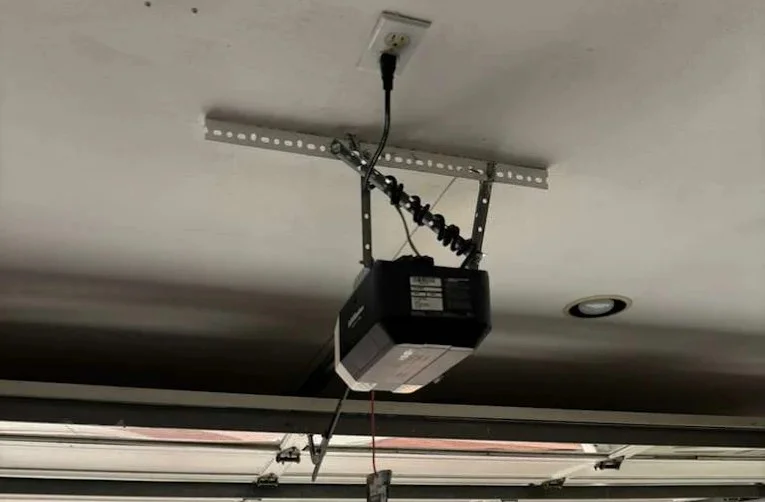
In Irvine, CA, a LiftMaster garage door opener can start acting differently after a power flicker, a remote glitch, changing weather, or normal wear. When the opener hesitates, reverses, beeps, or stops responding, the fastest way to regain control is to match the symptom to the most likely cause.
LiftMaster problems usually show up in a few repeat patterns: reversing from sensor or travel-limit issues, beeping from a low or disconnected battery backup, remote failures from signal or programming problems, and mid-cycle stops from door binding, force settings, or worn parts. Noting when it happens, like after a power flicker, during heat, or only with one remote, helps narrow the cause fast.
The Most Common LiftMaster Garage Door Opener Problems
Many repair calls fall into a few repeat categories. If you can describe exactly what the opener is doing, it becomes much easier to narrow down the cause.
If the opener started acting up right after a power flicker or sudden glitch, try a reset first, and read How to Reset a LiftMaster Garage Door Opener (Step-by-Step).
Here are the issues that show up most often:
- Remote not responding
- Keypad not working
- Door reverses early
- The door will not close
- Motor hums only
- Opener light flashing
The sections below break each one down into simple checks you can do safely. Several of these checks overlap with routine garage door maintenance, especially sensor alignment, door balance, and hardware inspection.
Remote Not Working or Working Only Up Close
If a remote only works when you stand close to the opener, the cause is often simple.
Common causes:
- Weak remote battery
- Signal interference nearby
- Remote needs pairing
- Antenna placement issue
What to check first:
- Replace the battery and test again.
- Stand inside the garage and test from a short distance.
- Check the opener’s hanging antenna wire. It should hang down freely, not wrapped around metal.
If the remote still does not control the door, the opener may have lost the remote code. That is when pairing or a reset sequence can help.
When to call an expert:
- Multiple remotes fail
- Range keeps shrinking
- Wall control also fails
At that point, garage door service can test the receiver and wiring and rule out power or board issues. That combination can point to a receiver issue or logic board trouble that needs professional testing.
Keypad Not Working or PIN Not Accepting
A LiftMaster keypad issue often comes from power, pairing, or a keypad setting that was changed.
Common causes:
- Keypad battery drained
- Wrong PIN entry
- Keypad lost pairing
- Keypad buttons worn
What to check:
- Replace the keypad battery.
- Enter the PIN slowly and press Enter firmly.
- If the keypad light is dim or inconsistent, the battery is a likely cause.
If the keypad still does not operate the door, you may need to pair it again using the Learn button process. If you already did a memory reset, this is normal because the keypad code was erased.
When the keypad works but the door does not move:
- Check door lock mode
- Check sensor alignment
- Check the door pathway
Some wall controls can enable “Lock” mode, which blocks remotes and keypads even though the opener is still powered.
The Door Will Not Close, and the Lights Flash
This is one of the most common LiftMaster garage door opener repair issues, and it is usually linked to safety sensors.
Common causes:
- Sensors misaligned
- Sensor lens dirty
- Sunlight interference
- Sensor wire loose
What to check:
- Confirm that both sensors have steady indicator lights.
- Wipe the sensor lenses with a soft cloth.
- Make sure nothing blocks the beam near the floor.
Try this safe test:
- Press and hold the wall button
- The door closes while held
If the door closes only when you hold the wall button, that strongly suggests the safety sensor system is not reading correctly.
When to call an expert:
- Sensor lights keep blinking
- Sensor wires damaged
- The door closes, then reverses
A damaged wire or bracket alignment issue can be tricky without the right tools.
Door Reverses Before Hitting the Floor
If the door starts closing, then reverses and opens again, the opener is detecting resistance or a safety issue.
Common causes:
- Track binding
- Door out of balance
- Travel limits off
- Force settings off
What to check:
- Inspect the tracks for debris.
- Listen for scraping or grinding.
- Check the safety sensors first, even if they show lights.
A door that is heavy or binding can overload the opener. That can trigger reversing, especially during closing.
If you have ongoing reversing problems and you are not sure whether a repair makes sense long-term, read When to Repair or Replace a LiftMaster Garage Door Opener.
Opener Hums But the Door Does Not Move
A humming opener usually means the motor is trying, but something is preventing movement.
Common causes:
- Door stuck on the track
- Trolley disengaged
- Gear wear inside
- Capacitor issue
What to check safely:
- Confirm the trolley is engaged. If the red emergency release cord is pulled, the opener can run but not move the door.
- Check that the door is not jammed against an object.
If the trolley is engaged and the door still will not move, do not keep pressing the button repeatedly. Repeated attempts can strain internal parts.
When to call an expert:
- Loud grinding noise
- Burning smell present
- The door will not lift by hand
A door that will not lift smoothly by hand can signal spring or hardware problems. Springs are dangerous to handle without training.
If you want foundational context for how an opener is positioned and connected, HGTV’s guide on how to install a garage door opener breaks down installation basics that many beginners miss.
Opener Runs, But the Door Barely Moves
If the motor runs and the chain or belt moves, but the door barely lifts, the problem is often door-related rather than reset-related.
Common causes:
- Door balance problem
- Roller wear
- Track alignment issue
- Broken spring symptom
What to check:
- Disconnect the opener using the emergency release cord.
- Carefully lift the door by hand.
A balanced door should stay around waist height without falling fast. If it drops or feels extremely heavy, stop and call for service. That points to a spring system issue, and that is not a safe DIY repair.
Wall Control Not Working
If the wall control does nothing, start with power and settings.
Common causes:
- Lock feature enabled
- Wire connection loose
- Power outage or GFCI
- Wall control failure
What to check:
- Confirm the outlet has power.
- Check the garage GFCI outlet and reset it if needed.
- Check if the wall control has a Lock button turned on.
If the opener has no lights at all:
- Check the breaker panel
- Check outlet power
- Check the plug connection
If the opener has power but the wall control does not respond, a wiring issue could be present.
myQ App Not Connecting or Keeps Going Offline
Connectivity issues are common, especially if the garage has weak Wi Fi coverage. If you are comparing app-based control options or troubleshooting smart features, Consumer Reports provides a clear breakdown of smart garage door opener controllers and which features tend to improve reliability.
Common causes:
- Weak signal strength
- Router changed settings
- 2.4 GHz mismatch
- App permissions blocked
What to check:
- Confirm your phone is on the same network you are trying to connect to.
- Confirm your router has a 2.4 GHz option available.
- Restart the router and retest.
If your opener was installed or moved recently, Wi Fi issues can also point to placement, setup, or system compatibility. For a full setup overview, read LiftMaster Garage Door Opener Installation for Homeowners.
Clicking, Popping, or Grinding Noises
Unusual sounds are often the first warning sign that parts need service.
Common causes:
- Chain tension off
- Sprocket wear
- Roller wear
- Loose hardware
What to check:
- Listen to where the sound comes from.
- Check the opener mounting for shaking.
- Check door rollers for wobble.
Avoid adding random lubrication to everything. Some areas need specific lubrication types, and other areas should stay dry. If the sound is new and getting louder, it is safer to schedule a technician to inspect the system.
Opener Light Blinks or the Unit Beeps
LiftMaster openers use lights and beeps to communicate status. The meaning depends on the model, but common patterns show up across many units.
Common causes:
- Sensor warning state
- Travel error state
- Battery backup alert
- myQ connection alert
What to check:
- Check safety sensors first.
- Confirm the door moves smoothly by hand after disconnecting.
- Review whether the opener has battery backup.
If the unit has a battery backup and beeps regularly, the backup battery may be low. That is separate from a reset issue.
Quick Troubleshooting Paths by Symptom
If you want the fastest path, match your symptom to a short set of checks.
Remote issues:
- Replace the battery first
- Pair the remote again
- Check lock setting
Closing issues:
- Check sensor alignment
- Clear sensor pathway
- Test wall hold-close
Reversing issues:
- Inspect track debris
- Check door balance
- Check travel limits
Noise issues:
- Check chain tension
- Inspect rollers’ condition
- Check mounting bolts
Connectivity issues:
- Check Wi Fi signal
- Confirm 2.4 GHz
- Reconnect inthe app
If you already tried multiple checks and the opener is still inconsistent, that is a strong sign that the root issue is not a simple setting. At that stage, a professional inspection can prevent more damage to the opener or door system.
Get Reliable Operation Back in Your Garage
If your LiftMaster garage door opener is acting up, the quickest win is identifying the exact symptom and matching it to the right check. Many issues come from sensors, pairing, travel settings, or a door that is no longer moving smoothly. When those are addressed correctly, the opener usually becomes consistent again.
Ocean Coast Garage Doors helps Irvine homeowners diagnose LiftMaster garage door opener repair issues, restore safe movement, and confirm remotes, keypads, and myQ are working the way they should. Contact us or give us a call.
Frequently Asked Questions
Why does the LiftMaster garage door opener work sometimes but not always?
That usually points to a sensor alignment issue, a weak remote battery, interference, or a door that binds only at certain points. If you tell us the exact symptom pattern, we can narrow it down quickly.
Can we repair a LiftMaster Garage Door Opener without replacing it?
In many cases, yes. We often restore performance by correcting sensor alignment, adjusting travel limits, replacing worn parts, and confirming the door is balanced.
Does resetting the opener solve most repair problems?
A reset helps with pairing and communication issues, but it will not correct a binding door, a sensor problem, or worn mechanical parts. If you want the clean reset steps, we recommend using the parent page and then checking sensors next.
Why does the door close and then open again right away?
That is commonly caused by sensors, resistance in the track, or incorrect travel and force settings. We can inspect the door movement and confirm the opener settings are safe.
What does it mean when the opener hums but the door does not move?
It can mean the trolley is disengaged or internal gears are worn. If you are unsure, we can inspect the drive system and confirm whether a repair is the best next step.
Why does the keypad light up but not open the door?
Often, the keypad needs a fresh battery or re-pairing to the opener. If Lock mode is enabled at the wall control, the keypad can appear to fail even when it is fine.
Can we help if myQ keeps disconnecting?
Yes. We can help you reset Wi Fi, reconnect myQ, and improve stability by confirming signal strength, router settings, and opener setup.
Is it safe to keep using the opener when it makes grinding noises?
It is safer to stop using it until we inspect it. Grinding can signal gear wear or a chain and sprocket issue, and continued use can worsen damage.
How do we know if the issue is the opener or the door?
A quick test is disconnecting the opener and lifting the door by hand. If the door is heavy or drops fast, the door system is the likely cause, not the opener settings.
When should we consider repair versus replacement?
If problems return often, safety features are outdated, or key parts are failing repeatedly, replacement may make more sense. We can help you compare options using the signs on your system.


