

Your garage door spring probably doesn’t need replacing if the door still opens and closes smoothly by hand, there’s no visible gap or rust-through in the coil, and the technician hasn’t actually disconnected the opener to test it manually.
Springs are a real, regulated safety component, and that real danger is exactly what some companies lean on to push an unnecessary garage door repair. The 6 signs below help you tell a genuine failure from a sales tactic.
Key Takeaways
- A door that still lifts smoothly by hand, with the opener disconnected, is a strong sign the spring is not failing.
- A real spring failure usually shows a visible gap, stretching, or rust-through in the coil.
- A technician should test the door manually before recommending spring replacement, not skip straight to a diagnosis.
- Fear-based language like “it could snap any day” without a visible cause is a sales tactic, not a diagnosis.
- Getting a second quote before authorizing spring work protects you from paying for something you don’t need.
Real Spring Failure Signs vs. Overselling Tactics
| Signal | Real Spring Failure | Overselling Tactic |
| Manual lift test | Door is noticeably heavy or uneven by hand | Test is skipped entirely |
| Visible coil condition | Gaps, stretching, or rust-through shown to you | No physical evidence shown |
| Language used | Specific, calm explanation of what’s failing | Vague fear language, “could snap any day” |
| Price | In line with other quotes for the same repair | Well above typical range for parts and labor |
| Documentation | You’re shown the spring before it’s replaced | Told it’s broken with nothing shown |
Here are the 6 clearest signs, in the order our technicians see them come up most.
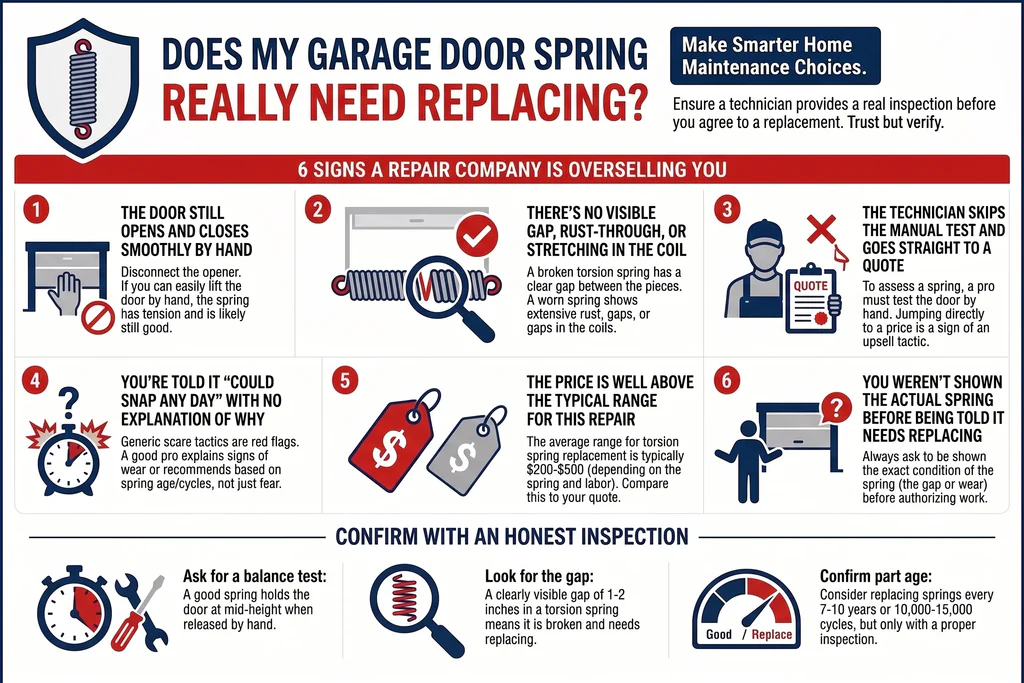
1. The Door Still Opens and Closes Smoothly by Hand
Disconnect the opener (or ask the technician to) and lift the door manually. A door with a healthy spring should feel relatively balanced and move smoothly. A door that’s genuinely struggling on a failing spring will feel heavy, uneven, or resistant.
What a Real Diagnosis Sounds Like
The door feels noticeably heavier on one side, won’t stay open on its own partway up, or drops suddenly when lifted by hand.
How to Fix Being Told Your Spring Needs Replacing Without a Manual Test
Ask the technician to disconnect the opener and show you how the door moves by hand before agreeing to any spring work. This single test rules out or confirms most of what a spring diagnosis depends on.
If you want to see all 9 warning signs, read How to Avoid Garage Door Repair Scams.
2. There’s No Visible Gap, Rust-Through, or Stretching in the Coil
A spring that’s actually failing usually shows something you can see: a physical gap in the coil, visible corrosion eating through the metal, or noticeable stretching beyond its normal length.
How a Technician With Nothing to Hide Explains It
You can see any of these signs yourself, or the technician points to a specific, visible section of the spring and explains what it means.
How to Fix a Spring Diagnosis With No Visible Evidence
Ask to see the exact spot on the spring that shows the problem. If there’s nothing to point to, ask what test or measurement was used instead, and don’t accept “trust me” as the full answer.
3. The Technician Skips the Manual Test and Goes Straight to a Quote
A diagnosis that happens before any actual inspection, sometimes within seconds of arriving, is one of the more common overselling patterns we see. A real evaluation takes a few minutes, not a few seconds.
The Slower, More Careful Version
The technician spends real time inspecting the coil, cables, and manual movement of the door before quoting anything.
How to Fix a Spring Quote Given Without an Actual Inspection
Ask what specifically was checked before the recommendation was made. A legitimate technician can walk you through the process step by step.
A rushed diagnosis like this often shows up right before a price that jumps unexpectedly, too. If your quote also changed once the technician was already there, read Why Did My Garage Door Repair Quote Change After the Technician Arrived? 5 Signs of a Bait-and-Switch Scam.
4. You’re Told It “Could Snap Any Day” With No Explanation of Why
Springs genuinely are dangerous under tension, which is exactly why this line works so well. But real risk should come with a real reason: age, visible wear, or a specific cycle count, not just a scary sentence meant to rush you.
The International Door Association publishes ongoing consumer guidance distinguishing real garage door hazards from sales pressure that exploits them. Their Scam Awareness resource is worth a look, along with a recent LinkedIn post from the association flagging this exact tactic in the field.
What Actually Backs Up a Real Recommendation
The technician gives you a specific reason tied to what they observed, not just a general warning with no evidence attached.
How to Fix Fear-Based Spring Replacement Pressure
Ask, calmly, “What specifically makes you say that?” A real answer will reference something visible or measurable, such as:
- A specific area of rust, corrosion, or stretching
- An unusual sound or resistance during the manual lift test
- A known age or cycle count for that spring type
A non-answer, or a repeated warning with no new detail, is your signal to slow down.
5. The Price Is Well Above the Typical Range for This Repair
Spring replacement costs vary by spring type and door size, but a quote that’s dramatically higher than what other companies charge for the same job is worth a second opinion before you agree to it.
How a Company That Won’t Oversell You Responds
You’ve gathered a second quote and the numbers are in a similar range. Consistency across quotes is reassuring; one major outlier is not.
How to Fix a Spring Replacement Quote That Seems Too High
If the recommendation happens without you ever seeing the part in question, there’s no way to verify the diagnosis yourself.
Get a second, written quote from another company before authorizing the work, unless the door is fully inoperable and genuinely can’t wait.
6. You Weren’t Shown the Actual Spring Before Being Told It Needs Replacing
The Version Where the Evidence Matches the Price
The technician walks you out to the door, points to the spring, and explains what you’re looking at before recommending anything.
How to Fix Never Being Shown the Spring Before a Replacement Recommendation
Ask to see it yourself before agreeing to the repair. A legitimate technician will have no issue showing you exactly what they’re basing the diagnosis on.
If a company won’t show you the part, it’s worth checking their credentials the same way. Read How Do I Know If a Garage Door Company Is Licensed and Insured? 7 Questions to Ask Before You Hire.
Get a Second Opinion Before You Replace a Spring You May Not Need
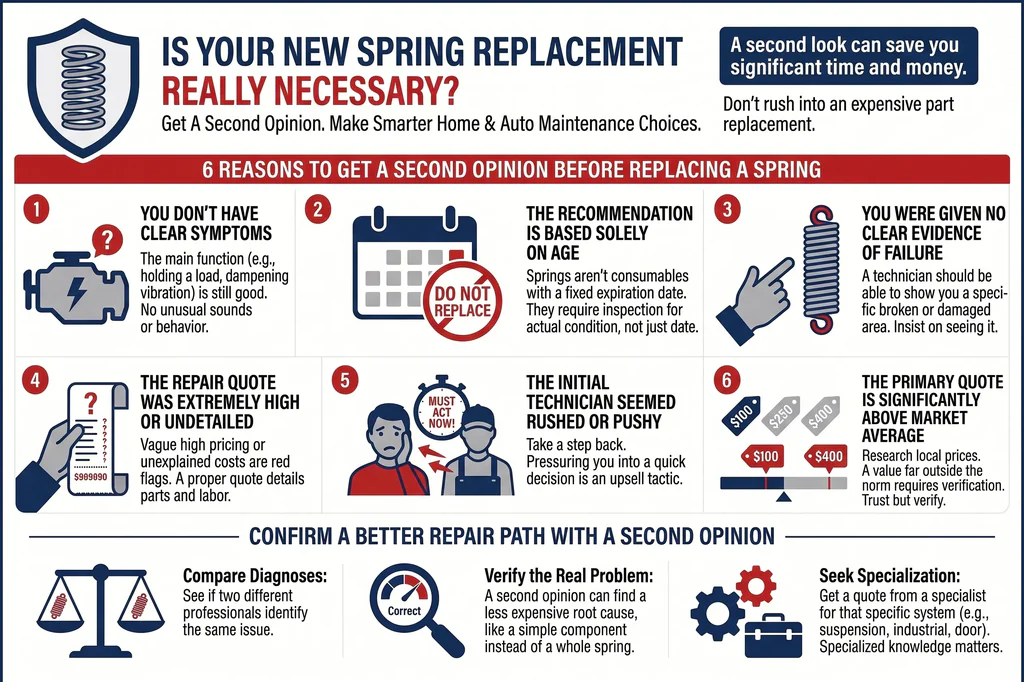
A spring replacement is a legitimate repair when the signs actually support it, and an easy repair to oversell when they don’t. Ask for the evidence, ask for the manual test, and don’t let a scary line substitute for either one.
Ocean Coast Garage Doors will show you the manual test and the actual part before recommending any spring work. If you’ve already been told your spring needs replacing and want a second opinion, contact us today or give us a call to book a free inspection with our team.
Frequently Asked Questions
What does a failing garage door spring actually look like?
In our experience, a real failure shows a visible gap in the coil, rust eating through the metal, or noticeable stretching. If none of that is present, ask what evidence the recommendation is based on instead.
How long do garage door springs usually last?
Most springs last several years and a wide range of open-close cycles depending on use and climate. Age alone isn't proof of failure; it's one factor among several we look at.
Why would a company recommend a new spring if my door still works fine?
One of our most common calls for a second opinion involves exactly this. Sometimes it's a legitimate early warning; often, when there's no visible evidence, it's an oversell.
Is it safe to test my garage door spring myself?
Never attempt to adjust, wind, or remove a garage door spring yourself. It's genuinely one of the most dangerous DIY repairs in this industry. You can safely observe how the door moves manually with the opener disconnected; leave any actual spring work to a professional.
What's a fair price range for a spring replacement?
Pricing varies by spring type, door size, and region, so get at least two quotes before agreeing to anything. Our rule of thumb from the field: a wildly higher outlier compared to other quotes is worth a second look.
Can a garage door spring fail without warning?
It's possible, but it's less common than companies sometimes suggest. In our experience, most failing springs show at least some visible sign beforehand, which is exactly why a manual test and visual inspection matter.
Should I be worried if the technician didn't disconnect my opener to check?
Yes, that's a meaningful gap in the diagnosis. A manual test with the opener disconnected is one of the most basic and reliable ways to evaluate spring condition, and skipping it is a pattern worth questioning.
What should I ask before agreeing to a spring replacement?
Ask what specific evidence supports the recommendation, ask to see the spring, and ask how the price compares to a typical range for the same job. Those three questions filter out most overselling attempts.
Is spring replacement the same thing as a bait-and-switch scam?
They're related but different. A bait-and-switch is about the price changing unexpectedly; spring overselling is about being told you need work you don't actually need. The same habit, asking for evidence before agreeing, protects you against both.

