
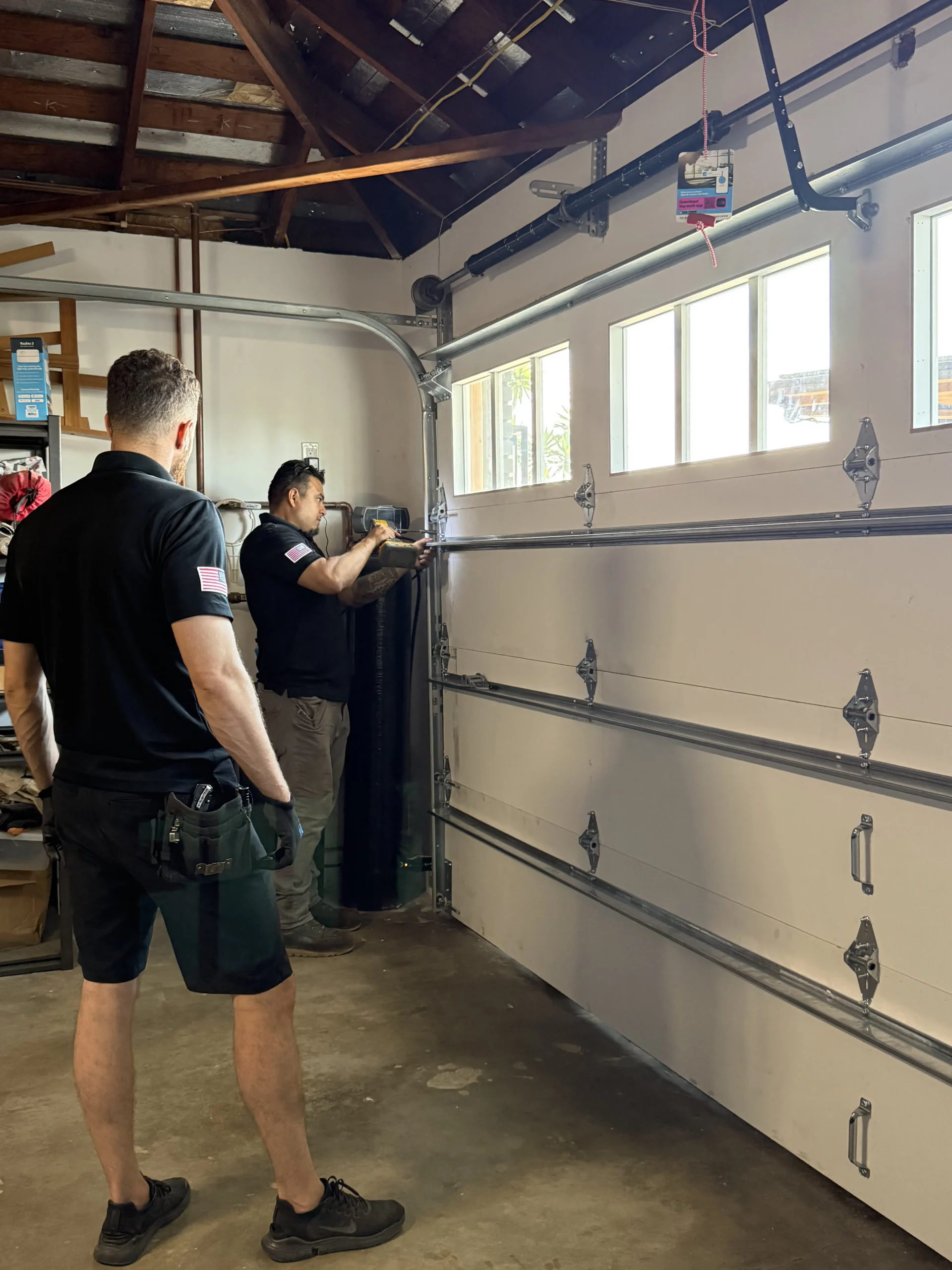
A garage door that stops halfway is not always a crisis, but it is never something to brush off. Some situations are safe to monitor briefly before taking action. Others require a technician on the same day because continuing to run the door puts people, property, and the entire system at serious risk. The challenge is knowing which situation you are actually in.
Homeowners in Irvine, CA often wait too long, hoping the problem is minor enough to ignore. In most cases, the opposite is true. The longer a compromised door goes without proper garage door service and repair, the more components get pulled into the problem. This guide lays out the specific signs that mean a technician needs to be called and why acting quickly leads to a better outcome every time.

Why Waiting Too Long to Call a Technician Makes Things Worse
Every garage door problem that goes unaddressed follows the same pattern. A small issue puts extra stress on the components around it; those components start to wear faster, and what started as a single repair becomes two or three. A door that stops halfway due to a worn roller, for example, puts additional load on the opener motor every time the homeowner forces it through a cycle. What could have been a straightforward roller replacement becomes a roller and opener repair.
The Real Cost of Delaying a Professional Garage Door Repair
- A single worn component under continued stress accelerates the wear of every connected part.
- Forcing the door through incomplete cycles adds strain to the motor, springs, and cables simultaneously.
- What begins as a minor repair becomes a major one the longer the door runs in a compromised state.
- Emergency same-day repairs typically cost more than scheduled service visits for the same issue.
- A door that fails completely may leave a vehicle trapped or a home unsecured until repairs are completed.
If you want to understand what is behind the stopping issue in the first place, our guide on What Are the Common Reasons Garage Door Stops Halfway? covers every common cause in detail.
Signs Your Garage Door Springs Need Immediate Professional Attention
Springs are under extreme tension at all times, and a failing spring is one of the most dangerous situations a homeowner can encounter with a garage door. A door that stalls halfway because of a spring issue is not going to improve with time. The spring is either on its way out or already broken, and neither situation is safe to leave unaddressed. This is one area where calling a technician the same day is always the right call.
Warning Signs That Point to a Spring Problem Requiring a Technician
- A loud bang or snap was heard from the garage, often even from inside the house.
- The door opens only a few inches before stopping, regardless of how many times the opener is activated.
- The door feels extremely heavy when tested manually with the opener disconnected.
- A visible gap or separation is present in the torsion spring coil above the door.
- The door drops suddenly when released manually instead of staying in position.
When Frayed or Damaged Cables Require a Same-Day Service Call
Cables work alongside the springs to carry the full weight of the door through every cycle. When a cable frays, kinks, or snaps, the door loses the balanced support it needs to travel evenly along the tracks, and it can stop, jam, or drop without warning. A snapped cable is a safety emergency. A fraying cable is an urgent repair that should not be put off until the next available appointment slot.
Signs Your Garage Door Cables Need Professional Repair Right Away
- One side of the door hangs lower than the other when stopped mid-cycle.
- A cable is visibly frayed, kinked, or has separated from the drum or bottom bracket.
- The door jerks or moves unevenly from side to side during operation.
- A snapping sound was heard during a recent open or close cycle.
- The door refuses to open or close at all after an unusual noise or impact.
Track Damage That Cannot Be Safely Left Unrepaired
Minor track issues can sometimes wait for a scheduled service visit. Significant ones cannot. A track that is severely bent, has pulled away from the wall, or has a section that has collapsed under the weight of the door creates a situation where continued operation risks damaging the door panels, snapping a cable, or causing the door to come off the tracks entirely. Any of these outcomes are more expensive and more dangerous than calling a technician promptly.
Track Issues That Signal It Is Time to Call a Technician
- A section of track is visibly bent, warped, or has separated from the wall bracket.
- The door grinds heavily or catches at the same point every cycle despite the track appearing clean.
- A roller has jumped out of the track or the door is sitting at an angle inside the frame.
- The track mounting hardware is loose, missing, or visibly damaged along the wall.
- The door makes a loud banging or clunking sound at a specific point that cannot be explained by debris.
When the Opener Is the Problem and Needs Expert Assessment
A garage door opener that is overheating, running a failing logic board, or simply too underpowered for the door it is running will stop the door mid-cycle in ways that are easy to mistake for a mechanical issue. Homeowners often spend time checking tracks and rollers when the real cause is the opener itself. If the door moves freely by hand but consistently stops when the opener is running it, the opener deserves a professional look before any other components are replaced.
Signs Your Garage Door Opener Needs a Professional Inspection
- The door moves smoothly by hand, but stops mid-cycle every time the opener runs it.
- The motor housing is very hot to the touch shortly after the door stops.
- The opener restarts and completes the cycle normally after resting for ten to fifteen minutes.
- The opener is more than ten years old and has recently developed inconsistent behavior.
- The logic board shows visible burn marks, or the unit produces a burning smell during operation.
According to the garage door opener safety standards outlined by DASMA, opener systems that show signs of inconsistent operation or overheating should be evaluated by a trained technician before they are used again.
Sensor Problems That Require More Than a Simple Cleaning
Sensor issues are often the first thing homeowners check, and in many cases a quick wipe of the lens and a minor realignment resolves the problem. However, sensors that keep failing after repeated cleaning and realignment point to something deeper, whether wiring damage, a failing sensor unit, or interference that cannot be resolved without the right diagnostic tools. Continuing to reset sensors that keep losing alignment wastes time and delays the actual repair.
Signs Your Garage Door Sensors Need Professional Diagnosis
- The sensor lights stay misaligned or go out again within days of being realigned.
- The wiring behind the sensor housing is visibly damaged, frayed, or has been chewed by pests.
- One sensor unit is physically cracked, corroded, or has moisture inside the housing.
- The door reverses unpredictably even after sensors have been cleaned and confirmed aligned.
- The sensor bracket is bent or broken and cannot hold the correct position, regardless of adjustment.
Our guide on How to Repair a Garage Door That Stops Halfway Fast covers what a professional sensor repair involves and what to expect during a service visit for this type of issue.
Electrical and Power Issues That Need a Licensed Assessment
Power-related causes of a garage door stopping halfway are easy to overlook because they do not produce obvious physical damage. A loose outlet connection, a failing circuit board, or voltage fluctuations from peak demand periods in Irvine during summer months can all interrupt the opener mid-cycle without leaving any visible sign. These issues are also unlikely to surface during routine garage door maintenance since they develop internally and show no visible wear until the system is already failing.
Electrical Warning Signs That Require Professional Attention
- The outlet powering the opener fails when tested with another device.
- The opener repeatedly trips the circuit breaker or GFCI outlet it is connected to.
- The power cord shows visible heat damage, fraying, or scorch marks near the plug or unit.
- The circuit board inside the opener has burn marks or a persistent burning smell during operation.
- The door stops inconsistently at different points each time, which suggests power fluctuation rather than a mechanical fault.
When Maintenance Alone Is Not Keeping the Door Running Reliably
A garage door that keeps stopping halfway despite regular maintenance is telling you something important. At a certain point in a system’s life, maintenance slows the decline but does not reverse it. Components reach the end of their rated cycle count, the opener loses the capacity it had when new, and the overall system needs more than upkeep. Recognizing this point and acting on it saves money compared to repeated service visits that address symptoms without resolving the underlying cause and wear.
Signs the Door Has Moved Beyond Routine Maintenance
- The door has required multiple service visits in the past twelve months for the same or related issues.
- Several components, such as rollers, springs, and the opener, are all showing wear simultaneously.
- The door is more than fifteen years old and has not had major components replaced.
- A professional has recommended the replacement of key components on more than one visit.
- The cost of upcoming repairs is approaching or exceeding the value of investing in a newer system.
The IDA recommends finding a qualified garage door professional when a system shows persistent performance issues, as a trained technician can assess whether the door needs targeted repairs or a broader system evaluation.
Our guide on How to Maintain Your Garage Door and Prevent It From Stopping Halfway outlines what a proper maintenance routine looks like and helps you identify when the door has crossed from a maintenance situation into a repair or replacement conversation.
Do Not Wait Until the Door Fails Completely
A garage door that stops halfway is giving you an opportunity. It is telling you something is wrong while there is still time to address it cleanly, affordably, and on your schedule. Waiting until the door fails completely removes that option and replaces it with an emergency repair, a trapped vehicle, or an unsecured home. The signs covered in this guide exist so you can act before that happens.
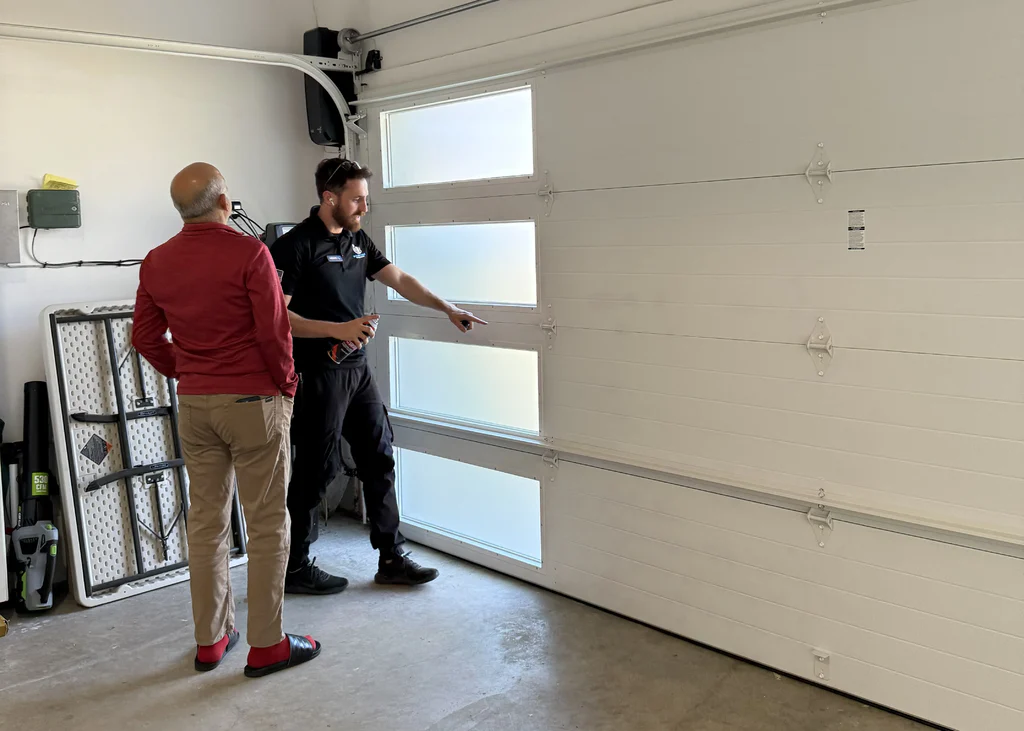
When you are ready for a professional assessment or need a technician to diagnose exactly what is causing your door to stop halfway, Ocean Coast Garage Doors serves homeowners throughout the Irvine area with fast, accurate service that gets to the root of the problem the first time. Contact us today or give us a call to schedule your inspection.
Frequently Asked Questions
Can I use my garage door at all while waiting for a technician?
If the issue involves springs, cables, or any component under tension, it is best to stop using the door entirely until a technician has assessed it. For minor issues like sensor misalignment, limited use may be acceptable, but it should be minimized.
What should I tell the technician when I call?
Describe when the stopping started, whether the door stops at the same point every time, any sounds you heard before or during the stop, and whether the door moves freely by hand with the opener disconnected. This helps the technician prepare for the visit.
Is a garage door that stops halfway a security risk?
Yes. A door that stops halfway cannot be properly secured, which leaves the garage and any connected entry points to the home exposed. Addressing the issue promptly is as much a security concern as it is a mechanical one.
Will a technician be able to repair the door on the first visit?
In most cases, yes. Experienced technicians carry common replacement parts and can complete the majority of repairs in a single visit once the cause has been diagnosed accurately.
How do I know if my garage door needs a repair or a full replacement?
A technician can assess this during the inspection. Key factors include the age of the system, the number of components showing wear, and whether the cost of repairs is approaching the value of a newer system.
What is the average timeframe for a professional garage door repair in Irvine, CA?
Most repairs are completed within one to two hours depending on the complexity. Spring and cable replacements take longer than sensor or limit adjustments, but most issues can be resolved in a single visit.
Can the weather in Irvine cause a garage door to suddenly need professional repair?
Yes. Prolonged heat accelerates wear on plastic components and lubricants, while temperature swings can affect spring tension and metal alignment. Doors that were marginal going into summer often develop stopping issues during the hottest months.
What happens if I keep running a garage door that needs professional repair? ?
Continued use under a known fault accelerates wear across connected components. A single issue that could have been resolved quickly can expand into multiple repairs or a full system replacement if the door is forced to keep operating.
How do I find a reliable garage door technician in Irvine, CA?
Look for licensed technicians with verifiable local experience, transparent service pricing, and clear communication about what the repair involves before any work begins. Reviews from Irvine homeowners are a reliable way to assess consistency and quality.


